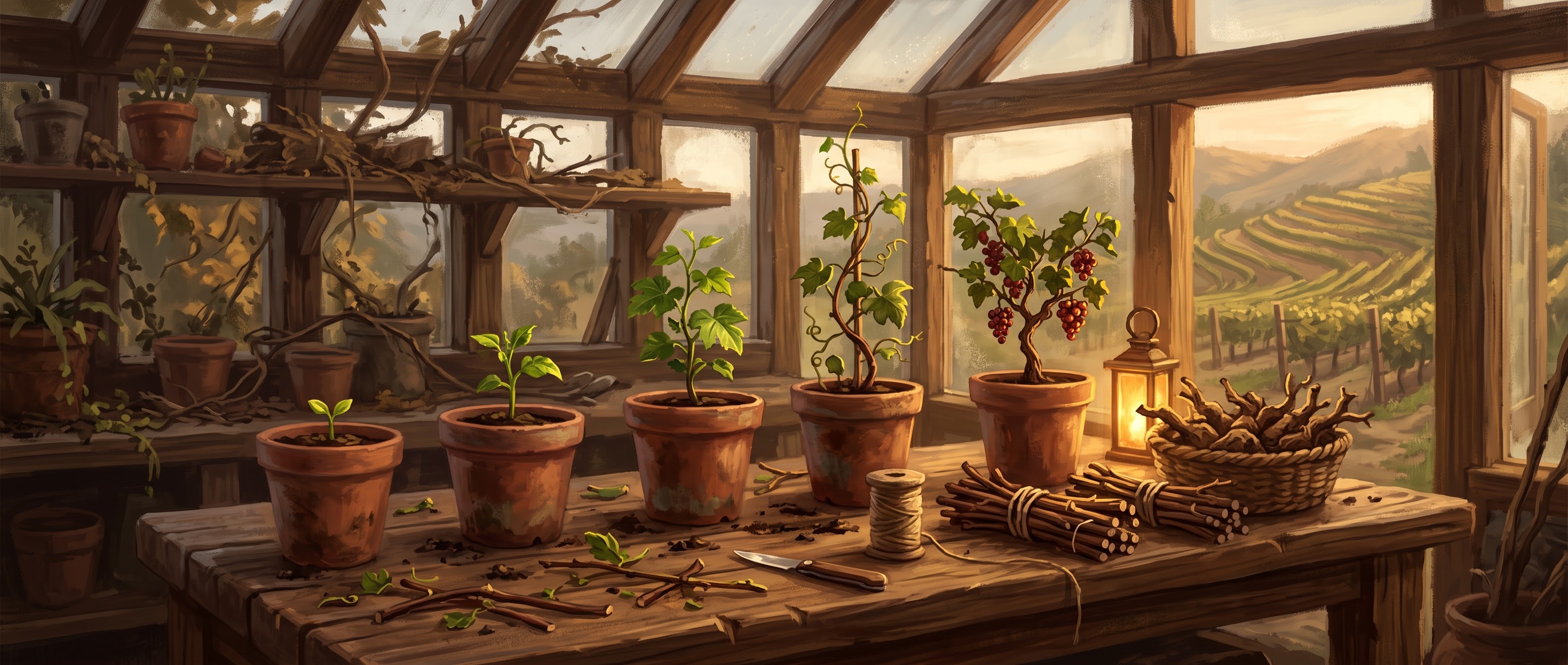
This is not live yet. It is being built and tested now, and it will roll out in stages over the next week or two. The chalk pit comes first. The new tools, the soil test kit and the vine assay kit, still have to be added in-world, followed by the Wine Press update, the vineyard update and the Grafting Table. We will post here as each piece arrives. Until then, everything below is a preview of what is coming.
Your vineyard is about to care how you treat it. Look after the soil and it pays more grapes, better grapes and cuttings. Take those cuttings to a Grafting Table and breed a grape nobody in the colonies has grown before.
The short version
- Nothing you do today stops working. Plant, water once and come back in a week, and the vineyard pays exactly what it always has.
- Care pays more. Keep the soil’s pH and moisture right through the growing week and the harvest grows by up to a third, and the grapes come in Fine or Choice.
- Choice weeks give cuttings. A cutting carries the vine’s whole genome. At a Grafting Table you graft it onto a hardier root, or cross two to raise new varieties.
- It is a trade between professions. Farmers make the fertilisers, Smiths supply sulphur, and Brewers grow and breed the vines.
How it rolls out
- The chalk pit, the new gatherable that the Farmer’s lime is made from. First to arrive.
- The soil test kit and the vine assay kit, the two new tools.
- The Wine Press update, so the press takes any grape.
- The vineyard update, which adds the care menu to vineyards.
- The Grafting Table.
Some groundwork is already in place behind the scenes, so you may notice sulphur turning up when you smelt. That is expected, and it is ready for when the rest arrives.
1. Chalk, from the new chalk pit
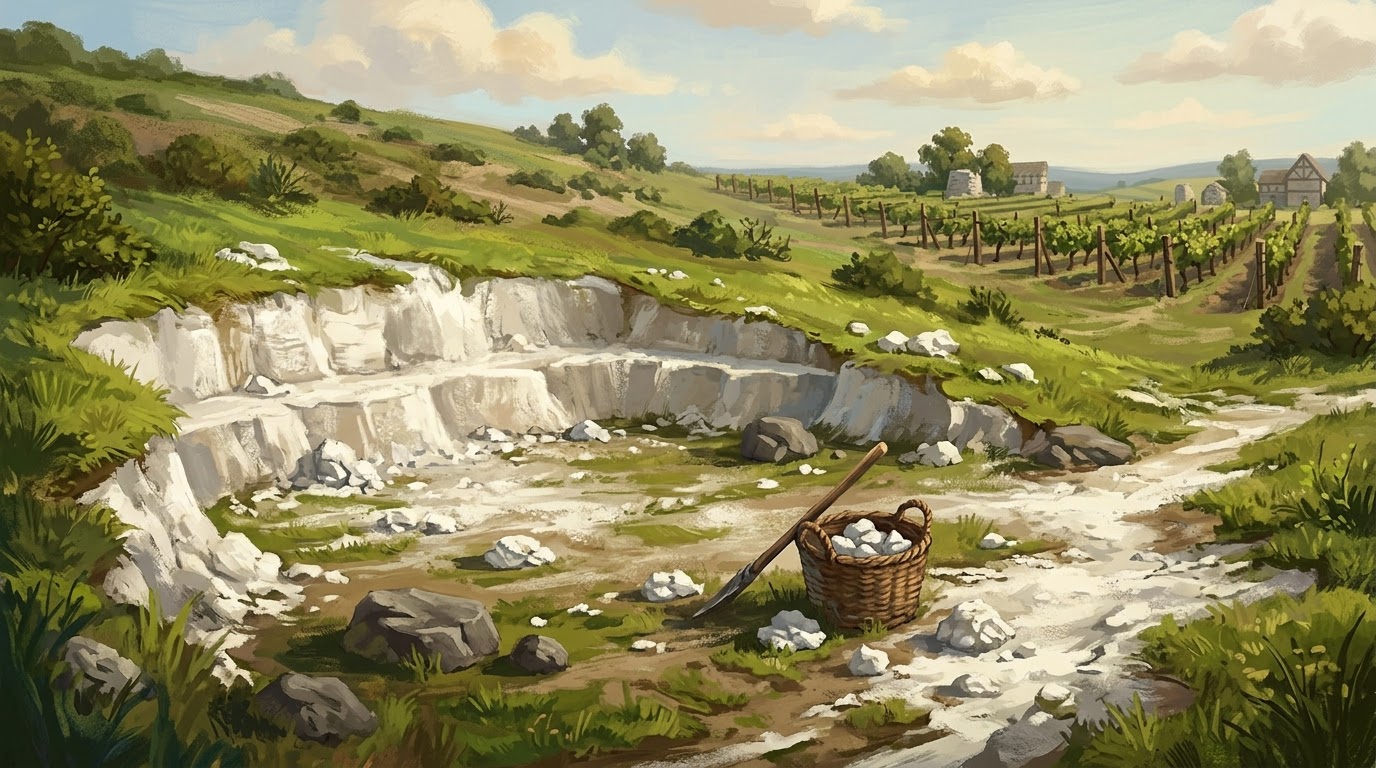
The chalk pit is a new gatherable: a low white bank you dig with a small basket. A dig takes about 45 seconds and 10 energy and gives 2 to 6 chalk, and one dig in five turns up a rock as well. The pit regrows in three hours, so it is a stock to manage, and a Farmer with a pit has chalk to sell.
Chalk has one use: it is the base of the Farmer’s garden lime, which sweetens sour soil.
2. Sulphur, from the Smelter
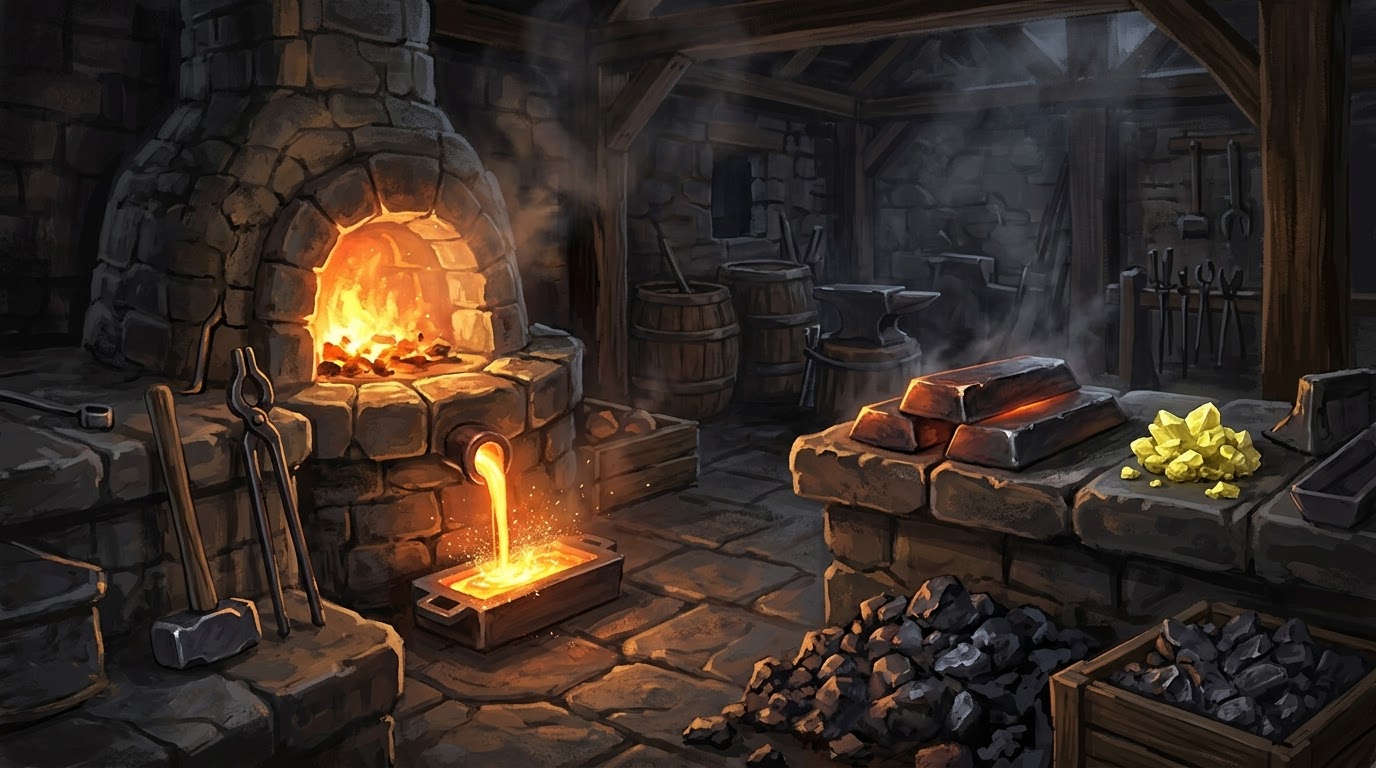
Smelting sulphide ores now leaves something behind. Every batch of iron or copper ingots has a 35% chance of leaving sulphur, and every batch of steel a 50% chance; usually one, sometimes two. It arrives with the ingots, wherever the ingots go: your pack or your colony’s chest. Silver and gold leave none.
Sulphur is what the Farmer needs to make soil more acid. That gives Smelters a buyer for something they never had before, and a reason to make steel.
3. The Compost Bin learns new kinds
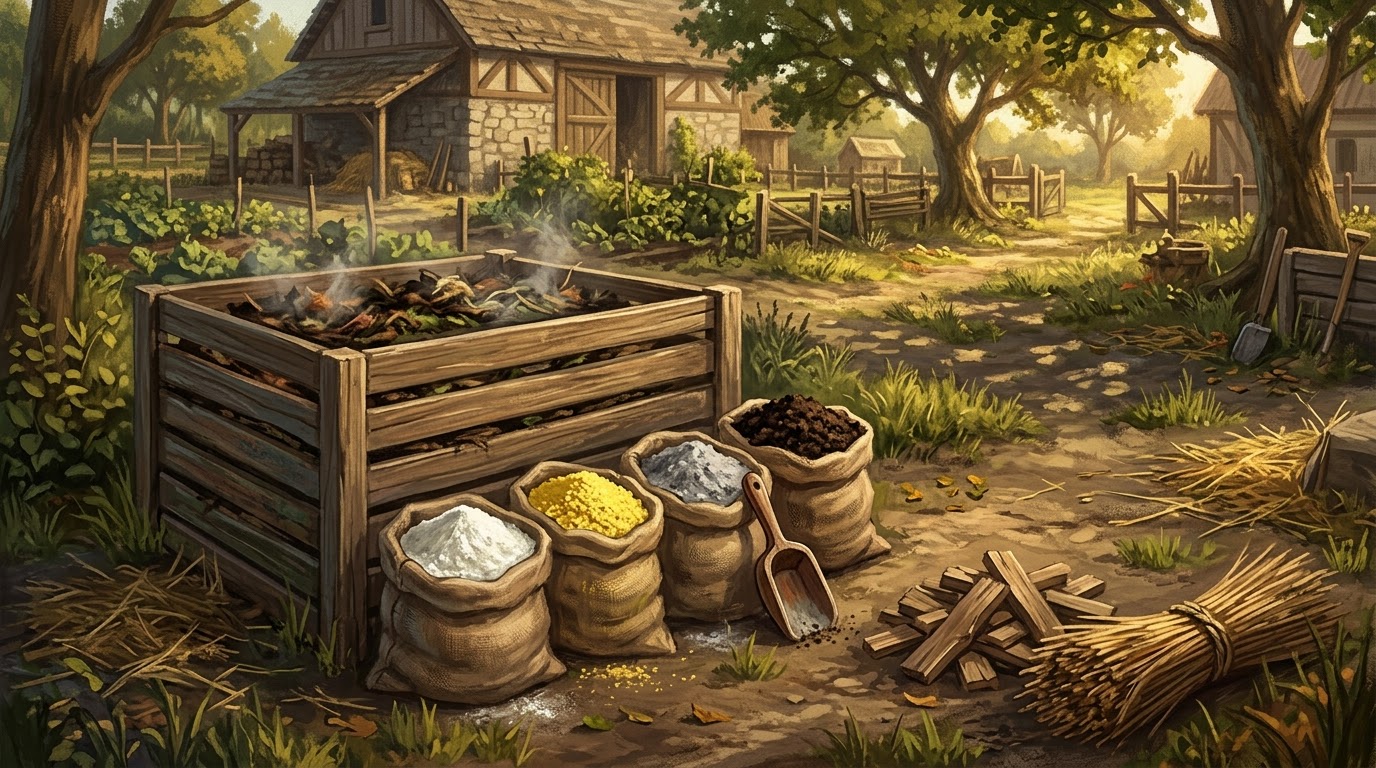
Plain fertilizer is unchanged: two dung, three and a half hours, any level. It feeds a field and does not move its pH. The bin also learns the kinds that steer a vineyard’s soil:
| Kind | Made from | Time | Does | Farmer level |
|---|---|---|---|---|
| garden lime | 2 dung + 2 chalk | 3.5 h | pH up half a point | 2 |
| sulphur mulch | 2 dung + 2 sulphur | 3.5 h | pH down half a point | 2 |
| wood ash | 3 oak wood scraps, gives 2 | 1 h | goes into the fine kinds | 3 |
| fine garden lime | 2 dung + 1 chalk + 1 wood ash | 5 h | pH up a fifth of a point | 4 |
| fine sulphur mulch | 2 dung + 1 sulphur + 1 wood ash | 5 h | pH down a fifth of a point | 4 |
| rich compost | 3 dung + 2 reed | 7 h | holds the pH still for three days | 5 |
The coarse kinds move the soil a long way; the fine kinds nudge it when you are nearly there. Overshooting with a coarse kind is the easy mistake, and knowing which to use is the Farmer’s skill. A Brewer cannot make any of these, so the vineyard depends on the Farmer.
4. Caring for a vineyard
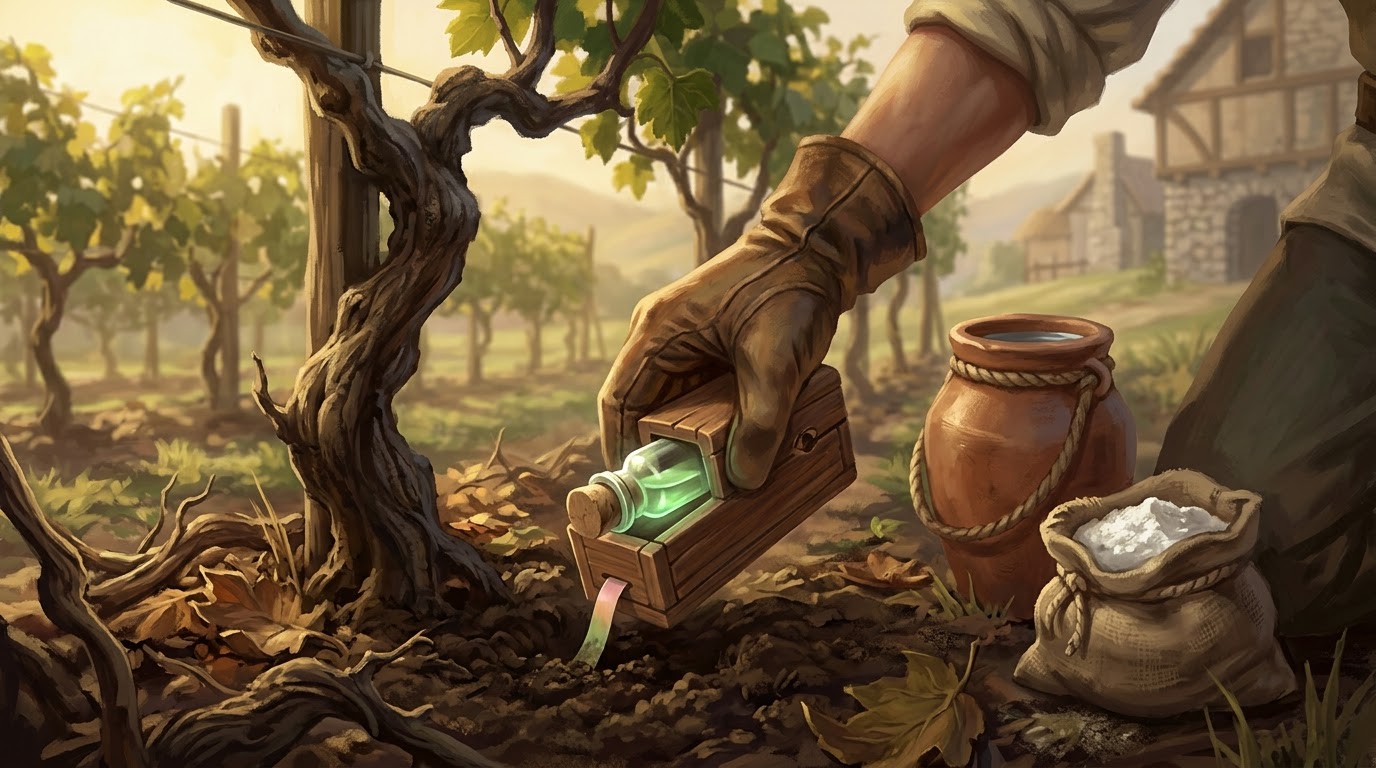
Care happens at the vineyard, during its growing week. Touch the field and choose from the care menu. You can do one of each a day, and a Brewer earns 2 crafting experience for each.
- Water with a clay jar fills the soil to 75. It dries about 12 a day.
- Amend with one of the Compost Bin’s kinds.
- Mulch with two reed to halve the drying for two days.
- Test while wearing a soil test kit. The kit tells you the exact pH and moisture and what the crop wants. The Farmer’s Master will sell it: 20 CXP, ten tests.
Without a kit, the field’s floating text tells you how the soil feels: Sour soil, Thirsty, Thriving, Waterlogged. Grapes want pH 5.8 to 6.8 and moisture 35 to 85. A vineyard’s soil sits at pH 5.6, a little sour, and drifts back there about 0.1 a day, so a field nobody limes stays sour all week.
What the week pays
| Care score | How you get there | The harvest |
|---|---|---|
| about 25 | planted and left | exactly today’s harvest |
| 45+ | a couple of waterings | 10% more grapes |
| 60+ | watered three times | 20% more, Fine grapes |
| 75+ | limed into the band and watered | 30% more, Choice grapes, and a cutting |
| 82+ | kept in band almost all week | a variety comes fully true to its line |
Fine grapes carry 10% more sugar and Choice grapes 25% more, which matters at the press.
5. The Grafting Table
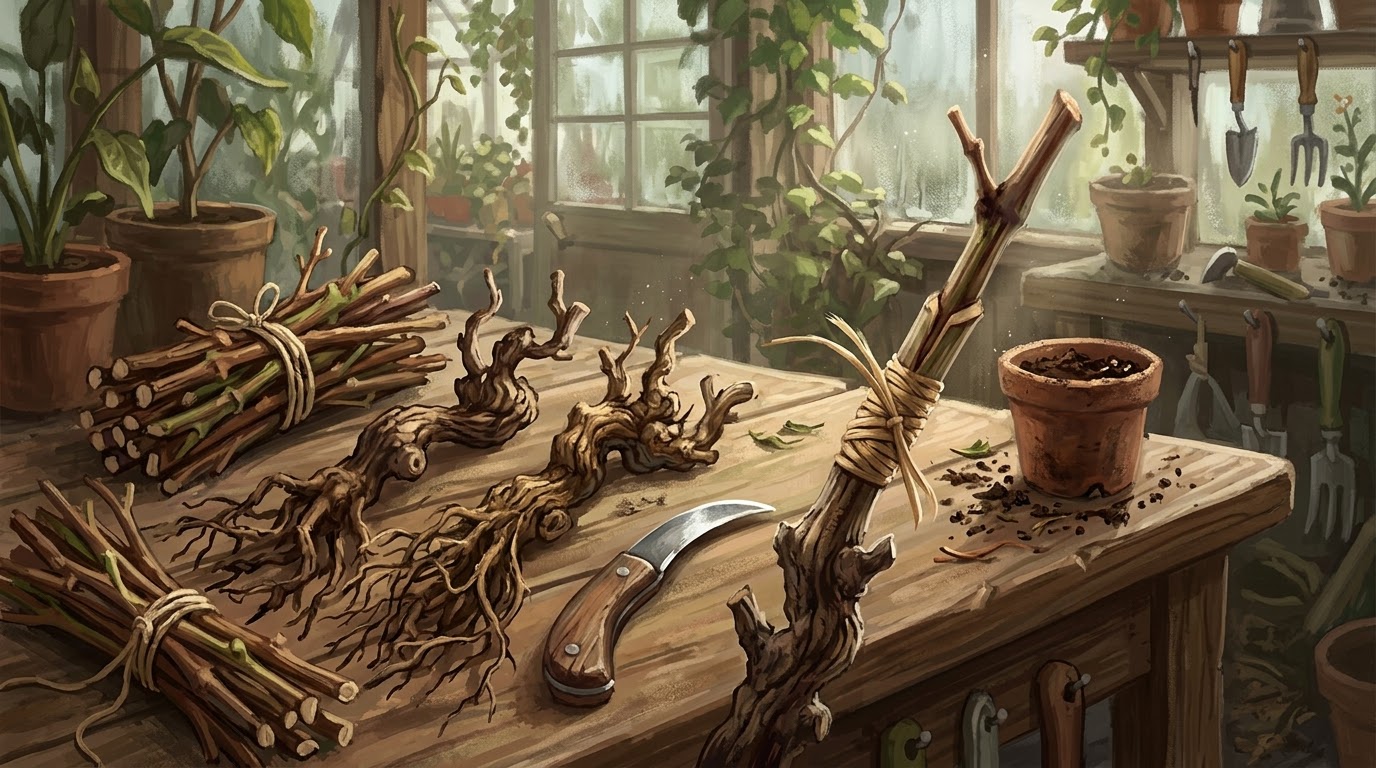
The Grafting Table is a Brewer station. Touch it and it opens on the website, where you do the work while the pots in front of you show what is growing. You need cuttings, which come from Choice harvests.
Graft: the same grape, on a hardier root
Join one cutting to one rootstock. You get a new line of the same grape that tolerates harder soil:
- Riparia copes with soil three tenths of a point sourer.
- Rupestris copes with soil fifteen points drier.
- Berlandieri copes with soil four tenths of a point more alkaline.
The Brewer’s Master will sell rootstocks at 150 CXP each. A graft takes three times in four. A Brewer of level 5 adds a tenth, and so does a cutting under three days old. A failed graft spends the cutting and the rootstock. Every attempt pays 50 Brewer CXP.
Cross: something new
Cross two cuttings and the table raises three to five seedlings, each with half its genes from each parent. They grow in the table’s pots for seven days, showing a little more of themselves every couple of days. When one ripens, you keep it, which founds a new variety and gives you its seed, or you discard it. A cross pays 100 Brewer CXP.
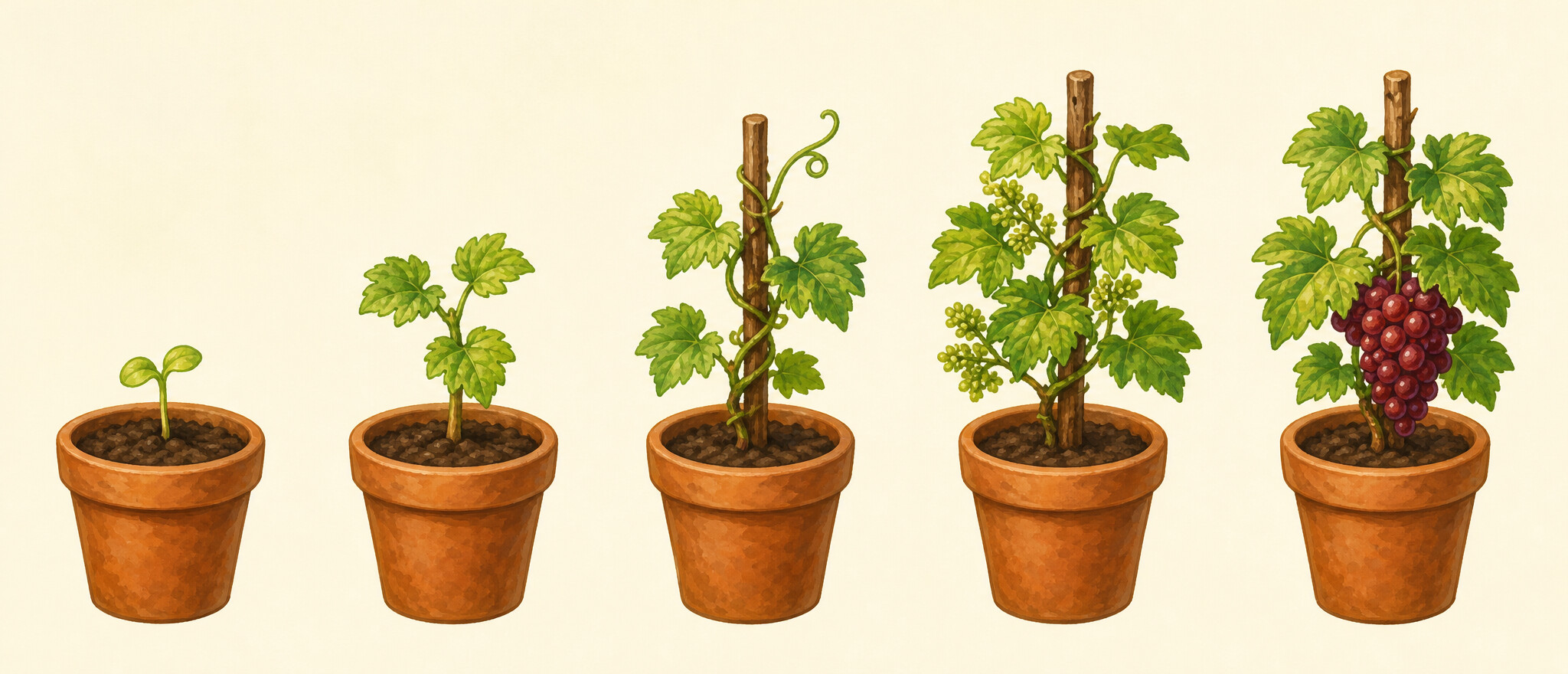
- One seedling in forty mutates, and one in twenty-five when the two parents come from different colonies. Mutation is the only way to new traits such as Muscat or a Bold, sweet grape.
- Selfing crosses a line with itself. It shows what the vine hides, but one seedling in four comes out weakened, and selfing a selfed line doubles that.
Varieties, names and rarity
The game names a variety from what it shows: Early Bold Red Muscat, Crisp White, Large Vigorous Hardy Red. There are 1,296 possible names. A second line with a taken name gets a number, such as Bold Red II. A graft keeps its variety and takes the next number. Rarity is how many living lines share a look: legendary while yours is the only one, then epic, rare and uncommon as it spreads.
The three grapes you already grow are where every variety begins, and they hide more behind their looks than you might think.
6. The vine assay kit
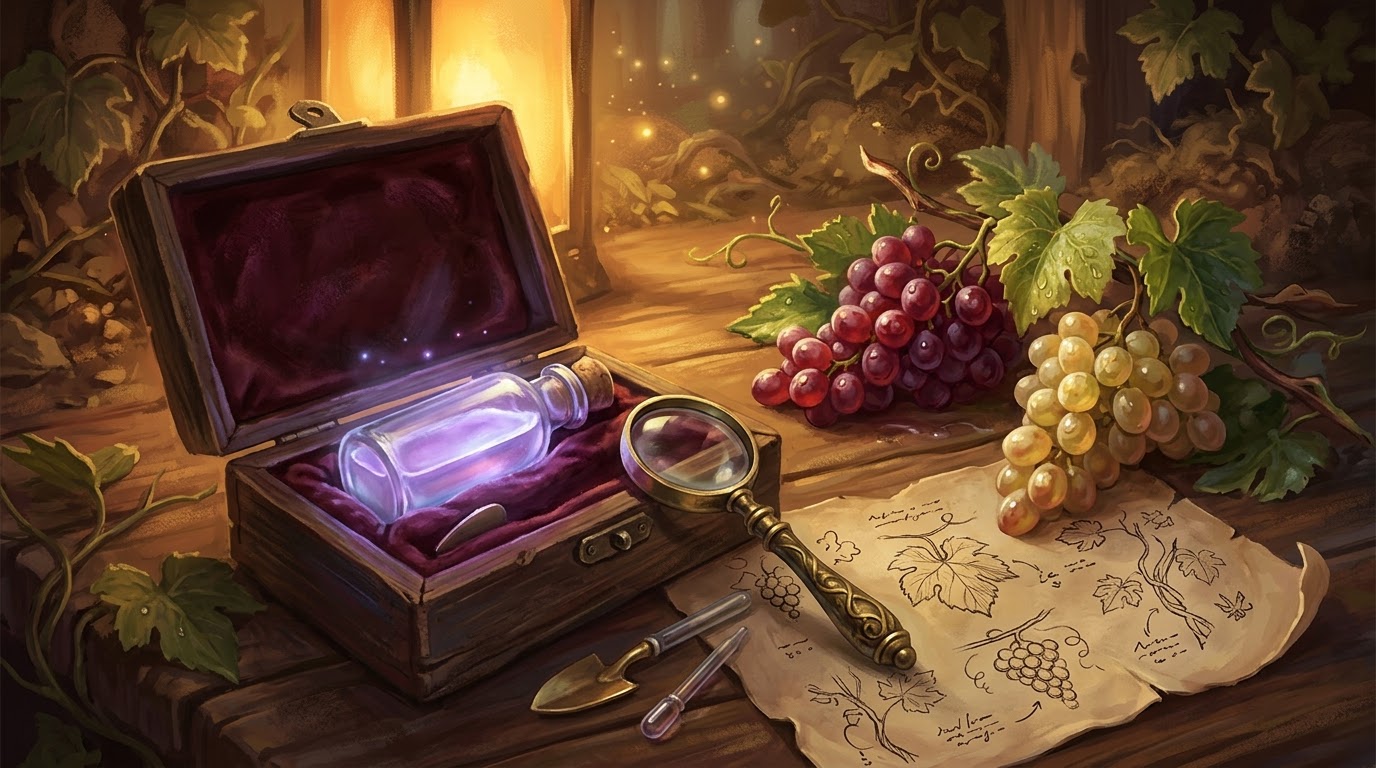
Every vine carries two of each gene and shows only one result. The vine assay kit reveals what a line hides, one gene at a time and for good. Wear it at a vineyard planted with the line and choose Assay from the care menu. The kit tells you which gene it found and what the pair is, and your register shows it from then on.
The Brewer’s Master will sell the kit: 40 CXP, ten uses. A kit is never spent on a line with nothing left to find. Drought and lime tolerance cannot be assayed; you learn those from how the vine does in the field.
7. The Wine Press takes any grape
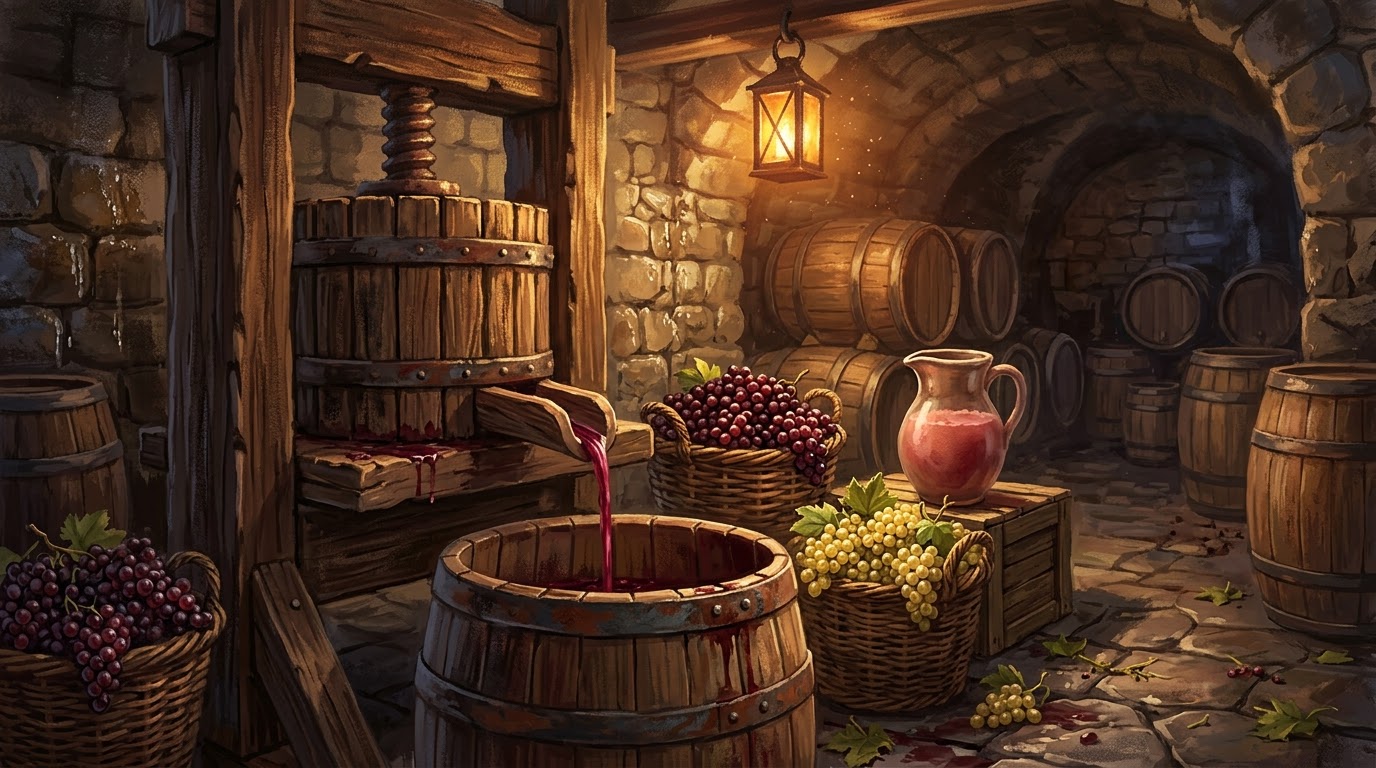
Two grapes still make one juice, but the press will take any grape:
- Fine red grapes make red grape juice (fine) at the grape’s own sugar.
- A variety makes its own juice.
- Two different grapes pressed together make a field blend at the average of their sugars.
Sugar is what the Fermentor turns into alcohol, so a Choice week makes a stronger wine. The three grapes you know press to the same juices as before.
8. Your vines, on the website
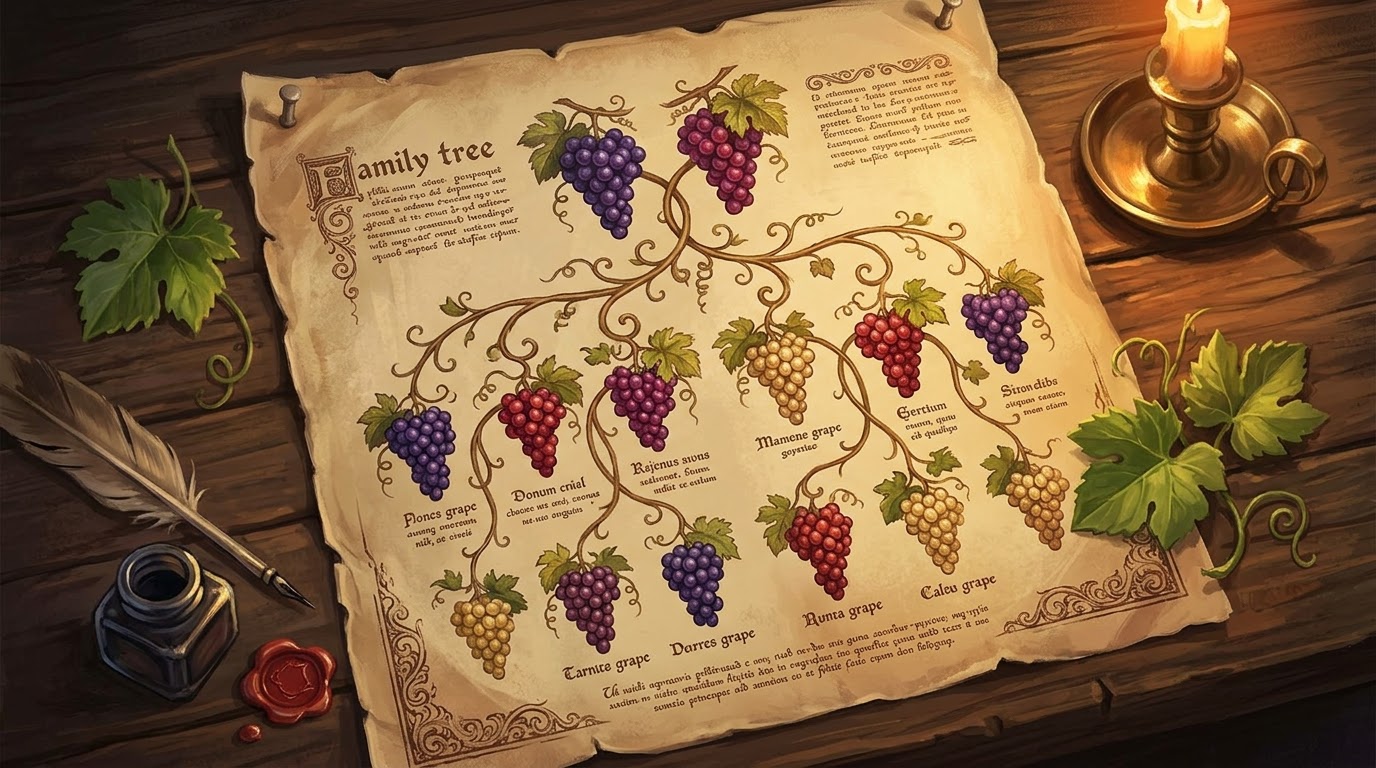
Under your profile, Your vines lists every line you founded, hold or have in the ground. Each line has its own page: the grape in its pot, its story from the day it was founded through every cross and every gene an assay found, each gene with its pair or hidden, its family tree, and your harvests of it by grade.
The cross planner takes two of your lines. For every gene both have revealed, it shows what a seedling may show and how often. Where either parent still hides a gene, it says so, and an assay is how you find out. It never guesses from the look.
9. Trading
Variety grapes, seed, juice and cuttings are yours to trade: by hand, in crates, in your vendor, or on the Grand Exchange at your own price. The market hubs deal only in the three base grapes and never stock a variety, so a variety is worth what players will pay for it. The fertilisers, chalk, sulphur and wood ash also trade between players.
When it arrives: where to start
- Farmers: rez a chalk pit, dig chalk, and make garden lime at your Compost Bin.
- Brewers: buy a soil test kit from the Farmer’s Master, plant a vineyard and test it in its growing week. It will read sour.
- Lime it into the band, water it two or three times, and harvest Choice grapes with a cutting.
- Take the cutting to a Grafting Table. Graft it onto rupestris for a dry corner, or wait for a second cutting and cross.
- Press your Choice grapes, open Your vines, and start planning the next cross.
Questions and ideas are welcome below. We will update this topic as each piece goes live.